Mortise: Heavy Lockcases & Chassis
Locks are not merely pick-resistant puzzles; they are structural barrier pins intended to resist thousands of foot-pounds of violent hydraulic and blunt impact force.
While lockpicking captures public fascination, statistical forced entries occur predominantly through blunt violence: kick-ins, sledgehammers, crowbars, and spreaders. In these scenarios, a lock's physical resilience is determined by its chassis geometry—specifically, the difference between tubular deadbolts and industrial mortise locksets.
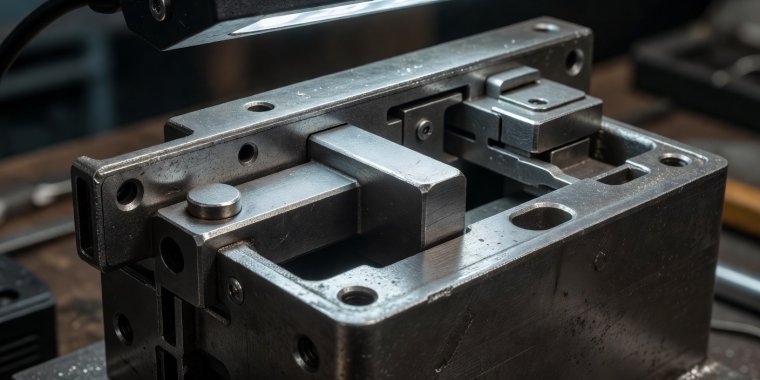
The Structural Weakness of Tubular Locks
Tubular locks are favored in mass residential construction because they can be installed in minutes using two simple cylindrical hole-saws. A 2-1/8 inch cross-bore is cut through the door face, and a 1-inch edge-bore connects it to the frame.
This construction creates three fundamental mechanical vulnerabilities:
- Slab Core Depletion: Boring a 2-1/8 inch hole removes over 60% of the solid wood or steel support inside the door stile, weakening the exact area where torque forces concentrate.
- Connecting Screw Shear: The exterior and interior lock trims are connected through this hollow space via two slender machine screws (often #8 or #10 gauge). A targeted blow with a heavy sledgehammer or pipe-wrench torque can easily shear these screws, causing the assembly to separate.
- Stamping Weakness: The bolt extension mechanism relies on thin stamped zinc or mild steel linkages that can buckle under horizontal pry pressure.
The Mortise Architecture Advantage
Mortise locks (certified under ANSI/BHMA Grade 1 A156.13) require carving a deep rectangular cavity—a mortise pocket—directly into the interior edge of the door slab. A heavy cast-iron or heavy-gauge steel rectangular cassette (typically 5 to 6 inches tall, 3.5 inches deep, and nearly an inch thick) slides securely into this pocket.
The mortise design offers several mechanical advantages:
1. Direct Threaded Cylinders
Rather than relying on slender connecting screws, a mortise cylinder is threaded with standard 1.150" x 32 UNS threads. It screws directly into the tapped cast-steel wall of the mortise body, secured from the edge by an armored faceplate and a hardened dogging screw. The cylinder cannot be pulled outward without physically tearing the cast steel box apart.
2. Solid Hardened Deadbolt Inserts
A commercial mortise deadbolt is machined from forged brass or cast steel, featuring a full 1-inch throw. Embedded inside the bolt are free-spinning hardened steel roller pins. If an intruder attempts to slice the deadbolt using a reciprocating saw or hacksaw blade, the hardened rollers spin against the teeth, preventing cut progression.
3. Structural Integration of Latch and Deadbolt
Mortise units contain both the heavy-duty day latch and the deadbolt within a single steel chassis. When the deadbolt is thrown, the spring latch deadlatches as well, creating two separate physical locking surfaces anchored into the door frame.
Frame Reinforcement: The Critical Counterpart
A Grade 1 mortise lock is ineffective if installed into a standard wooden jamb secured by short trim nails. Under blunt impact, wood jambs split along the grain before the steel deadbolt yields. High-security installations require an anchored steel strike box secured into the underlying wall studs with four 3-inch case-hardened steel screws, transforming the door, hardware, and structural framing into a unified defensive system.