Cylinders: Pin Stacks & Security Pins
Understanding the microscopic mechanics of the pin-tumbler cylinder explains why two superficially identical brass cylinders exhibit radically different bypass resistance.
The standard pin-tumbler system consists of a static cylindrical casing (the bible) and an internal rotating cylinder (the plug). Running vertically through both components are drilled chambers containing three critical elements: a stainless steel or phosphor bronze spring, an upper driver pin, and a lower key pin. When no key is inserted, the springs push the driver pins down across the rotational boundary—the shear line—preventing the plug from turning.
When an authorized key slides into the keyway, its cut depths correspond exactly to the varying lengths of the bottom key pins. This elevates the top edges of all key pins so they meet flush with the outer surface of the plug. The interface between key pins and driver pins now matches the shear line, permitting unhindered mechanical rotation.
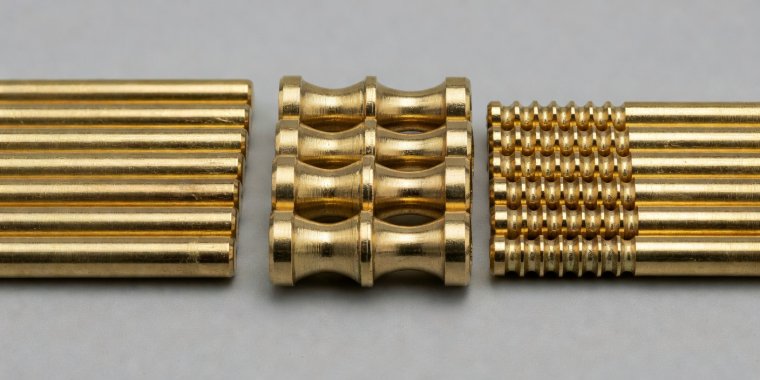
The Geometry of Security Pins
Basic residential locks employ uniform cylindrical driver pins. Because manufacturing clearances leave slight variations in hole alignment (typically 0.03mm to 0.07mm), applying light rotational torque with a tension wrench forces one specific pin chamber to bind first. A technician gently lifts that pin until its bottom edge clears the shear line; the plug rotates an imperceptible fraction of a millimeter, creating a microscopic shelf that holds the driver pin suspended.
To thwart this method, high-security lockmakers replace uniform brass drivers with modified security geometries:
1. Spool Pins
Spool pins are lathed down in their center section, resembling an hourglass or thread spool. Under picking tension, the thin waist of the spool tilts into the shear line, creating a deep false set where the lock core rotates several degrees without opening. Attempting to lift the spool further forces the plug to push back counter-rotationally against the pick, instantly exposing the technician to dropped pins if tension is not eased with surgical precision.
2. Serrated Pins
Serrated pins feature multiple fine, razor-sharp grooves lathed into their outer circumference. When lifted, these grooves catch on the internal lip of the plug chamber, giving false auditory and tactile clicks that fool an attacker into believing the pin has reached the true shear line.
3. Mushroom & T-Pins
Featuring a flared flange on one side, mushroom pins combine the false-set trap of a spool with an aggressive lip that binds rigidly against counter-milled plug chambers. When an attacker attempts to rake the pins rapidly, these flanges jam tightly in place.
Counter-Milling and Plug Sleeves
Security pins lose efficiency if installed in loose, unrefined chamber bores. In premium architectural cylinders, the plug chambers feature precision counter-milling—recessed lips carved into the upper edge of the pin holes. When a spool or serrated pin tilts under picking tension, its edge drops into this counter-milled pocket, completely immobilizing the core until tension is fully released.
Kinetic Bumping Counter-Measures
Lock bumping relies on uniform kinetic energy transfer. If every pin stack has identical weight and spring pressure, an impact on a 999-cut bump key launches all top drivers simultaneously. Hardware engineers negate bumping by alternating pin materials and diameters: combining dense steel ball-bearing pins, light brass drivers, and varied spring tensions (light copper coils mixed with heavy stainless coils). Furthermore, auxiliary side-pins and blocking pins ensure the core cannot turn unless secondary lateral grooves along the key blade are actively read.
FIELD SUMMARY CHECKLIST
Before certifying a pin-tumbler deadbolt for external door use, ensure:
- Minimum 5 functional pin stacks (6 is preferred commercial standard).
- At least 3 chambers loaded with hardened spool or mushroom security drivers.
- Integrated hardened steel anti-drill pins protecting the shear line.
- Patented keyway restriction to prevent unauthorized key duplication.